

Cold brew ratios: the fundamentals
Ratios are the most important variable in cold brew. They control extraction—the amount of flavor pulled from the grounds. A high coffee-to-water ratio creates a concentrate, while a lower ratio makes a brew you can drink immediately. Everything from the body to the acidity depends on this balance.
Ratios aren’t absolute laws, but rather guidelines that respond to your beans, your method, and your taste. It’s a system of cause and effect. We’re aiming for consistency, but also for a brew that you enjoy. Think of it less as a rigid formula and more as a starting point for exploration.
Grind size is deeply connected to ratios. A coarser grind, typical for cold brew, needs a longer steep time to extract adequately. If your grind is too fine, you risk over-extraction and a muddy, bitter flavor even with a standard ratio. Conversely, a very coarse grind may require a slightly higher ratio to compensate for the reduced surface area.
Standard ratios
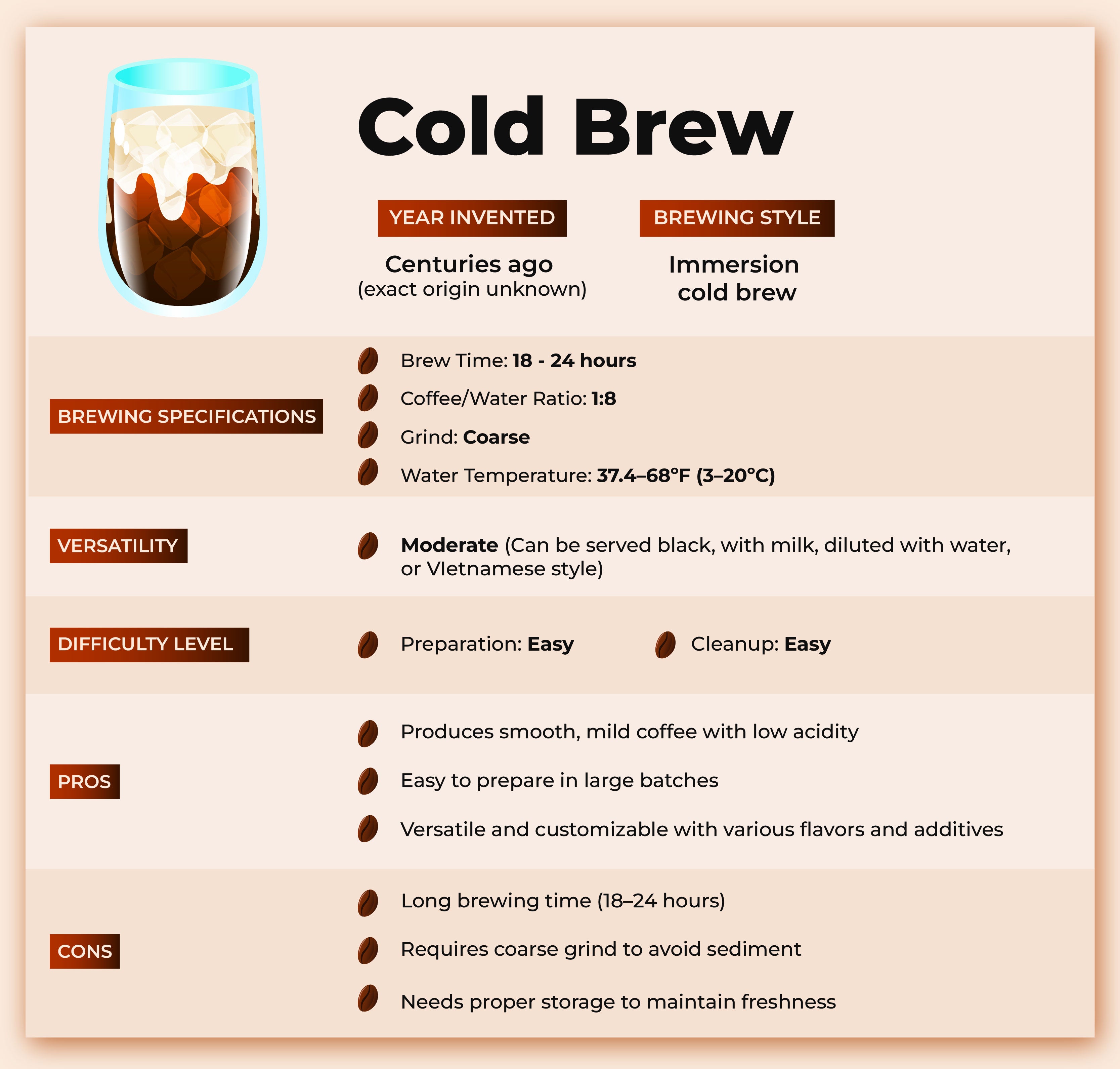
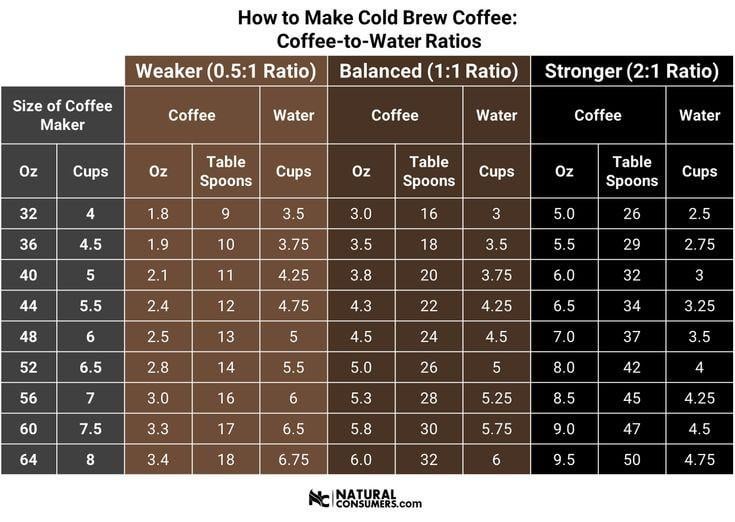
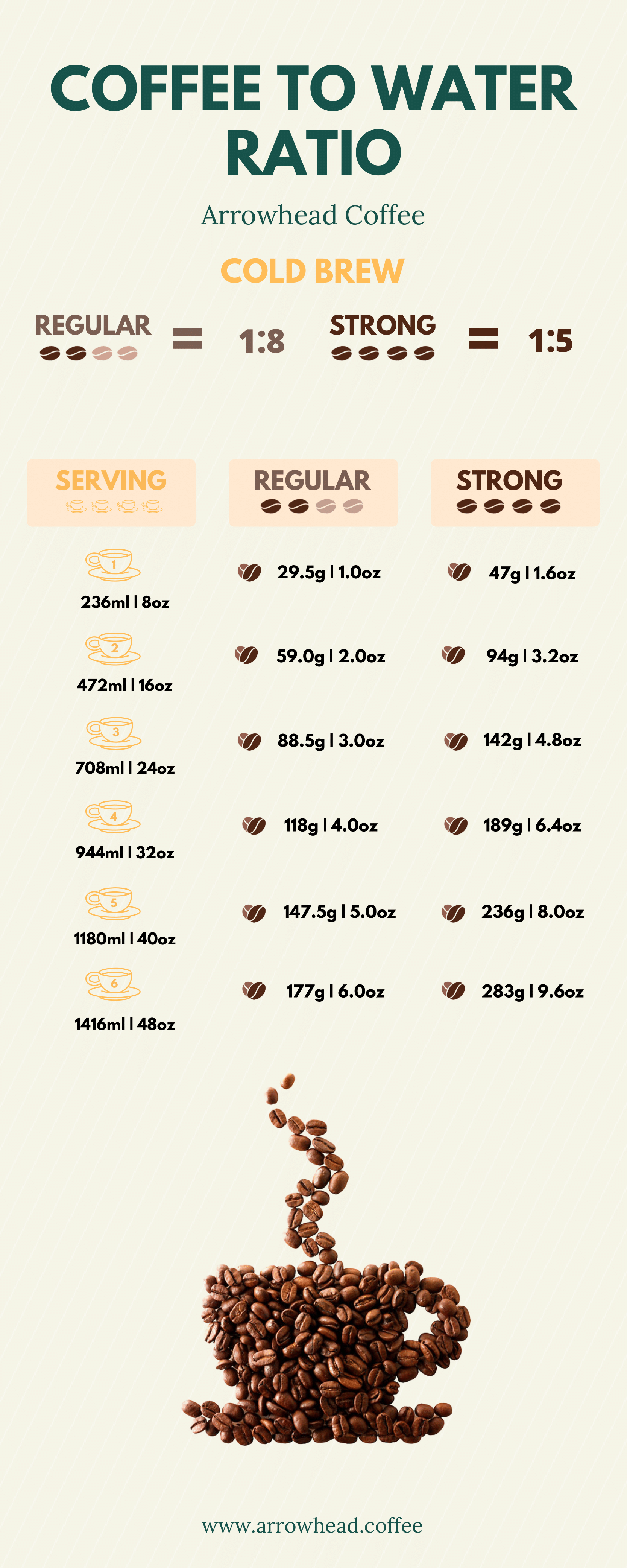
A 1:8 ratio (one part coffee to eight parts water) is the standard for a strong concentrate. Use this if you plan to add plenty of milk or ice. A 1:10 ratio is slightly more balanced—it stays potent but loses some of the heavy intensity of a 1:8 brew.
Moving down, a 1:12 ratio creates a brew that's closer to ready-to-drink, though many still prefer to add a splash of water. At 1:16, you're getting into territory where the brew is quite weak and might need significant enhancement. The strength is relative, of course, and depends on the coffee.
Personally, I find a 1:10 ratio works wonderfully with most beans I use. It gives me a good balance of strength and complexity without being overly concentrated. It’s versatile enough to enjoy straight or with additions. However, bean origin plays a role. A bright, floral Ethiopian Yirgacheffe might benefit from a slightly lower ratio to showcase its delicate flavors, while a bolder Sumatran Mandheling can handle a higher ratio.
Don’t be afraid to adjust based on your preferences. If you find a 1:8 concentrate too strong, try 1:9 or 1:10. The goal is to find the sweet spot where the flavors are fully developed but not overwhelming.
Adjusting for your brew method
Different cold brew methods require slight ratio adjustments to account for varying extraction efficiencies. Immersion methods, like using a Toddy or a French press, generally work well with the standard ratios we discussed. The prolonged, full contact between water and grounds allows for thorough extraction.
Slow drip systems, however, often benefit from a slightly higher coffee-to-water ratio. Because the water passes through the grounds more slowly, it doesn't extract as efficiently as in a full immersion method. Counter Culture Coffee’s guide notes this, and I’ve found increasing the coffee by about 10-15% can help achieve a balanced brew with these systems.
Japanese-style iced coffee, where hot coffee is brewed directly over ice, is a different beast entirely. It's not truly 'cold brew' in the traditional sense, but it offers a similar result. Ratios are closer to standard hot brew ratios, but you need to account for the ice melting and diluting the coffee. Adjust accordingly.
Grind size is crucial here too. A coarser grind is essential for immersion methods to avoid over-extraction. For slow drip, a medium-coarse grind works best. Remember, a coarser grind needs more time, and potentially a slight ratio adjustment to compensate.
- Immersion (Toddy or French Press) works best between 1:8 and 1:12.
- Slow Drip: 1:6 to 1:8 (adjust up from standard)
- Japanese-Style Iced Coffee: Similar to standard hot brew, adjust for ice melt
Cold Brew Ratio & Method Comparison - 2026
| Brewing Method | Grind Size | Coffee to Water Ratio | Steep Time | Resulting Strength | Recommended Use Cases |
|---|---|---|---|---|---|
| Immersion | Coarse | 1:8 to 1:15 | 12-24 hours | Medium to High | Everyday drinking, concentrate for lattes and iced coffee |
| Slow Drip (Kyoto Style) | Medium-Coarse | 1:10 to 1:12 | 6-12 hours | Medium | Balanced flavor, ideal for those who prefer a less intense cold brew |
| Japanese Iced Coffee | Medium | 1:10 to 1:16 | Flash Chilled (seconds) | Medium | Bright, aromatic, and best served immediately |
| Immersion (Large Batch) | Extra Coarse | 1:10 to 1:20 | 18-24 hours | Medium to High | Preparing large quantities for multiple servings or commercial use |
| Immersion (Toddy System) | Coarse | 1:8 to 1:12 | 12-24 hours | High | Concentrate requiring dilution, popular for its smooth profile |
| Cold Brew Tea (similar principles) | N/A | 1:15 to 1:25 | 8-12 hours | Light to Medium | Refreshing iced tea, delicate flavors benefit from longer steeping |
Illustrative comparison based on the article research brief. Verify current pricing, limits, and product details in the official docs before relying on it.
Concentrate vs. ready-to-drink
The intended use of your cold brew – concentrate or ready-to-drink – dictates the optimal ratio. A concentrate, as the name suggests, is brewed strong and designed for dilution. This typically means ratios of 1:6 to 1:8. A ready-to-drink brew, on the other hand, aims for a strength you can enjoy immediately, usually around 1:12 to 1:16.
Calculating dilution ratios is simple. If you brew a 1:8 concentrate, a 1:1 dilution (equal parts concentrate and water) will give you a 1:16 final brew. Adjust to your taste! I often start with a 1:2 dilution and then add more water if needed.
I personally adjust my concentrate ratio depending on how I plan to consume it. If I’m making cold brew with milk, I’ll lean towards a stronger 1:7 or 1:8 concentrate. If I plan to drink it black, I'll go a little lighter, around 1:9 or 1:10, to avoid it being overly intense. It is a subtle difference, but noticeable.
Experiment with different mix-ins beyond water and milk. Cold brew pairs beautifully with tonic water, sparkling water, or even a splash of orange juice.
How bean type changes the ratio
Different coffee beans respond differently to cold brewing and, consequently, to different ratios. Light roasts, known for their bright acidity and complex flavors, often benefit from slightly higher ratios to ensure sufficient extraction. They can sometimes taste underdeveloped at lower ratios.
Medium roasts are the most versatile and generally work well with standard ratios. They offer a good balance of flavor and body. Dark roasts, with their bold, chocolatey notes, can quickly become overly bitter with high ratios. Lower ratios are often preferred to tame the intensity.
For example, an Ethiopian Yirgacheffe, with its delicate floral notes, might shine at a 1:9 ratio. A Sumatran Mandheling, known for its earthy, full-bodied flavor, might be best at 1:10 or even 1:12. A dark-roasted Italian blend could be perfect at 1:14.
Consider the density of the bean as well. Denser beans (often from higher altitudes) generally require slightly more coffee to achieve the same level of extraction.
- Light roasts usually need a 1:8 to 1:10 ratio to pull enough flavor.
- Medium Roasts: 1:10 to 1:12
- Dark Roasts: 1:12 to 1:16
Finding your own ratio
The 'perfect' cold brew ratio is subjective. What tastes amazing to me might not be your ideal cup. That’s why experimentation is key! Don’t be afraid to deviate from the standard ratios and explore what works best for your palate.
To find what you like, brew three small batches at 1:8, 1:10, and 1:12 using the same beans. Tasting them side-by-side is the only way to see how the body and strength change. Most people start at 1:8, but I've found it's often too aggressive for lighter roasts.
I strongly recommend keeping a brewing journal. Record the bean type, roast date, grind size, ratio, steep time, and your tasting notes for each batch. This will help you identify patterns and refine your process over time. It’s the best way to dial in your perfect brew.
Don’t get discouraged if your first few attempts aren’t perfect. Cold brew is a forgiving process, and even small adjustments can make a big difference.
No comments yet. Be the first to share your thoughts!